


Authors: Dr. Ankit Raj Singh, Mr. Kamal Krishna
ISBN-13: 9789349554290
DOI: https://doi.org/10.5281/zenodo.17848238
Format: Paperback and e-book
Pages: 226
Product Dimensions: 6 x 9 inch
Publisher: Bharat Global Publications
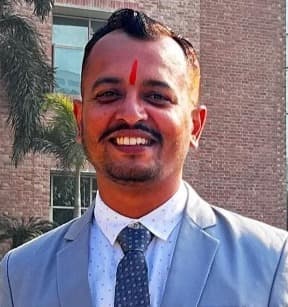
Dr. Ankit Raj Singh is an esteemed academician, researcher, and innovator with over a decade of experience across academia, industry, and research. He currently serves as Assistant Professor of Management at the Panipat Institute of Engineering and Technology (PIET), Samalkha (Panipat), where he teaches courses in Marketing, Brand Management, Corporate Social Responsibility, and International Trade.
He earned his Doctorate in Management from Sharda University, with a research focus on wellness tourism and consumer behaviour. Dr. Singh has published extensively in Scopus-indexed, ABDC-listed, and UGC Care journals, and has presented his work at numerous national and international academic conferences. He has also served as editor of several academic volumes in business and management studies.
With over six years of industry experience in the travel sector, Dr. Singh has contributed to corporate training programs for organizations like Hindustan Coca-Cola Pvt. Ltd. and Tata Power Solar India Ltd. An avid traveler, he has explored all 24 Indian states and 7 Union Territories, which informs his deep understanding of customer behaviour and service dynamics.
A staunch advocate for innovation and Intellectual Property Rights (IPR), Dr. Singh holds multiple design patents and copyrights granted by the Government of India. His research and teaching focus on wellness tourism, consumer behaviour, digital marketing, organizational change, and AI in management. He is actively guiding PhD scholars and postgraduate students in research and innovation projects.
Dr. Singh also holds several key leadership roles at PIET, serving as Chairman of the Placement & Summer Training Committee, and as a member of both the Research & Development Committee and the Internal Quality Assurance Cell (IQAC). He is also deeply engaged in community development through Rotary International’s CSR initiatives, including education, health, and environmental programs. His exceptional contributions have earned him recognition in social service activities, along with commendable service in Delhi Civil Defence.
Through his academic leadership, research innovation, and social commitment, Dr. Singh continues to shape the future of business management education across India and beyond.

Mr. Kamal Krishna is a rising academic and interdisciplinary researcher with a strong presence across management, innovation, education policy, and sustainability studies. He has been actively involved in designing and leading institutional development programs, international conferences, and capacity-building workshops focused on emerging areas like AI, digital governance, and leadership for the future of work.
His academic contributions span peer-reviewed research papers, edited book chapters, and policy-focused publications, covering topics such as entrepreneurship, human resource analytics, digital transformation, and ESG strategy. Known for his collaborative approach, he works closely with faculty and researchers from central universities and reputed institutions across India, fostering rich, cross-disciplinary dialogue.
Mr. Krishna has presented his work at numerous national and international academic conferences, and has been recognized in competitive research and innovation forums. His work bridges academic theory with practical implementation, especially in designing high-impact, scalable models for educational transformation.
His core strengths lie in:
• Integrating AI and sustainability frameworks into management thought
• Advancing institutional leadership in higher education reform
• Supporting grassroots innovation and research mentorship
As an editor and co-author, Mr. Krishna brings clarity, depth, and a forward-looking vision to the evolving discourse on digital transformation and sustainable development.
Integrated Approaches to AI, Digital Transformation and Sustainable Development explores the powerful convergence of technology and sustainability in a world that is rapidly advancing toward a digital future. As nations, industries, and communities grapple with the challenges and opportunities of the 21st century, this book provides a comprehensive and insightful examination of how Artificial Intelligence (AI) and digital innovation can be strategically integrated to support sustainable development goals.
The book begins by highlighting the transformative potential of AI-driven systems in reshaping business operations, governance models, environmental conservation, and social well-being. It delves into how data analytics, automation, machine learning, and digital platforms are redefining efficiency, transparency, and decision-making across sectors. At the same time, it emphasizes the ethical, environmental, and socio-economic considerations that must guide such transformations.
A key feature of this book is its interdisciplinary approach. It brings together perspectives from technology, sustainability science, public policy, and development studies to illustrate how digital transformation can be aligned with global sustainability agendas such as the United Nations Sustainable Development Goals (SDGs). Readers will gain insights into real-world applications—ranging from smart cities, renewable energy systems, digital governance, and green supply chains to climate modeling, responsible AI frameworks, and inclusive digital ecosystems.
The authors also examine barriers to technologically enabled sustainable development, such as digital divides, cybersecurity risks, ethical dilemmas, and unequal access to resources. By presenting case studies, emerging trends, and future pathways, the book encourages stakeholders to adopt integrated, collaborative, and human-centric approaches.