
Authors: Geetanjali Dutta, Dr. Ankit Raj Singh
ISBN-13: 9789349554443
DOI: https://doi.org/10.5281/zenodo.19273557
Format: Paperback and e-book
Pages: 215
Product Dimensions: 6 x 9 inch
Publisher: Bharat Global Publications

Geetanjali Dutta is an accomplished academician and emerging researcher in the field of Management Studies, recognized for her strong academic credentials and sustained commitment to scholarly excellence. She is currently serving as Assistant Professor in the Department of Business Studies at the Panipat Institute of Engineering and Technology (PIET), Panipat, where she actively contributes to teaching, research, and institutional development initiatives.
She completed her Master of Business Administration (MBA) with specialization in Human Resource Management from Kurukshetra University, earning the distinction of University Gold Medallist and Academic Scholar in recognition of her outstanding academic performance. Earlier, she secured the position of District Topper in higher secondary education, reflecting a consistent record of academic distinction throughout her educational journey. She continues to engage actively in academic research and scholarly advancement.
Her research interests encompass Artificial Intelligence in Education, Consumer Protection in Tourism, Digital Transformation, Human Resource Management, and Sustainable Tourism. She has contributed scholarly book chapters in edited volumes addressing contemporary themes such as the integration of Artificial Intelligence in personalized education models and consumer protection challenges in aviation within the broader framework of Tourism 4.0 and smart tourism ecosystems.
At PIET, she plays an active role in academic planning, curriculum engagement, and student mentoring. She is a Member of the Training and Placement Committee, where she facilitates industry–academia interaction and supports student placement initiatives. She has also been associated with academic evaluation and institutional quality enhancement processes.
She has presented her research at the 1st International Conference (2025) and has received several recognitions for her academic and professional contributions, including a Certificate of Merit and a Certificate of Appreciation awarded by the Deputy Commissioner.
Through her dedication to teaching, research, and academic innovation, Geetanjali continues to contribute meaningfully to the evolving domains of management education, digital transformation, and next-generation tourism studies.
Dr. Ankit Raj Singh is an esteemed academician, researcher, and innovator with over a decade of experience across academia, industry, and research. He currently serves as Assistant Professor of Management at the Panipat Institute of Engineering and Technology (PIET), Samalkha (Panipat), where he teaches courses in Marketing, Brand Management, Corporate Social Responsibility, and International Trade.
He earned his Doctorate in Management from Sharda University, with a research focus on wellness tourism and consumer behaviour. Dr. Singh has published extensively in Scopus-indexed, ABDC-listed, and UGC Care journals, and has presented his work at numerous national and international academic conferences. He has also served as editor of several academic volumes in business and management studies.
With over six years of industry experience in the travel sector, Dr. Singh has contributed to corporate training programs for organizations like Hindustan Coca-Cola Pvt. Ltd. and Tata Power Solar India Ltd. An avid traveler, he has explored all 24 Indian states and 7 Union Territories, which informs his deep understanding of customer behaviour and service dynamics.
A staunch advocate for innovation and Intellectual Property Rights (IPR), Dr. Singh holds multiple design patents and copyrights granted by the Government of India. His research and teaching focus on wellness tourism, consumer behaviour, digital marketing, organizational change, and AI in management. He is actively guiding PhD scholars and postgraduate students in research and innovation projects.
Dr. Singh also holds several key leadership roles at PIET, serving as Chairman of the Placement & Summer Training Committee, and as a member of both the Research & Development Committee and the Internal Quality Assurance Cell (IQAC). He is also deeply engaged in community development through Rotary International’s CSR initiatives, including education, health, and environmental programs. His exceptional contributions have earned him recognition in social service activities, along with commendable service in Delhi Civil Defence.
Through his academic leadership, research innovation, and social commitment, Dr. Singh continues to shape the future of business management education across India and beyond.
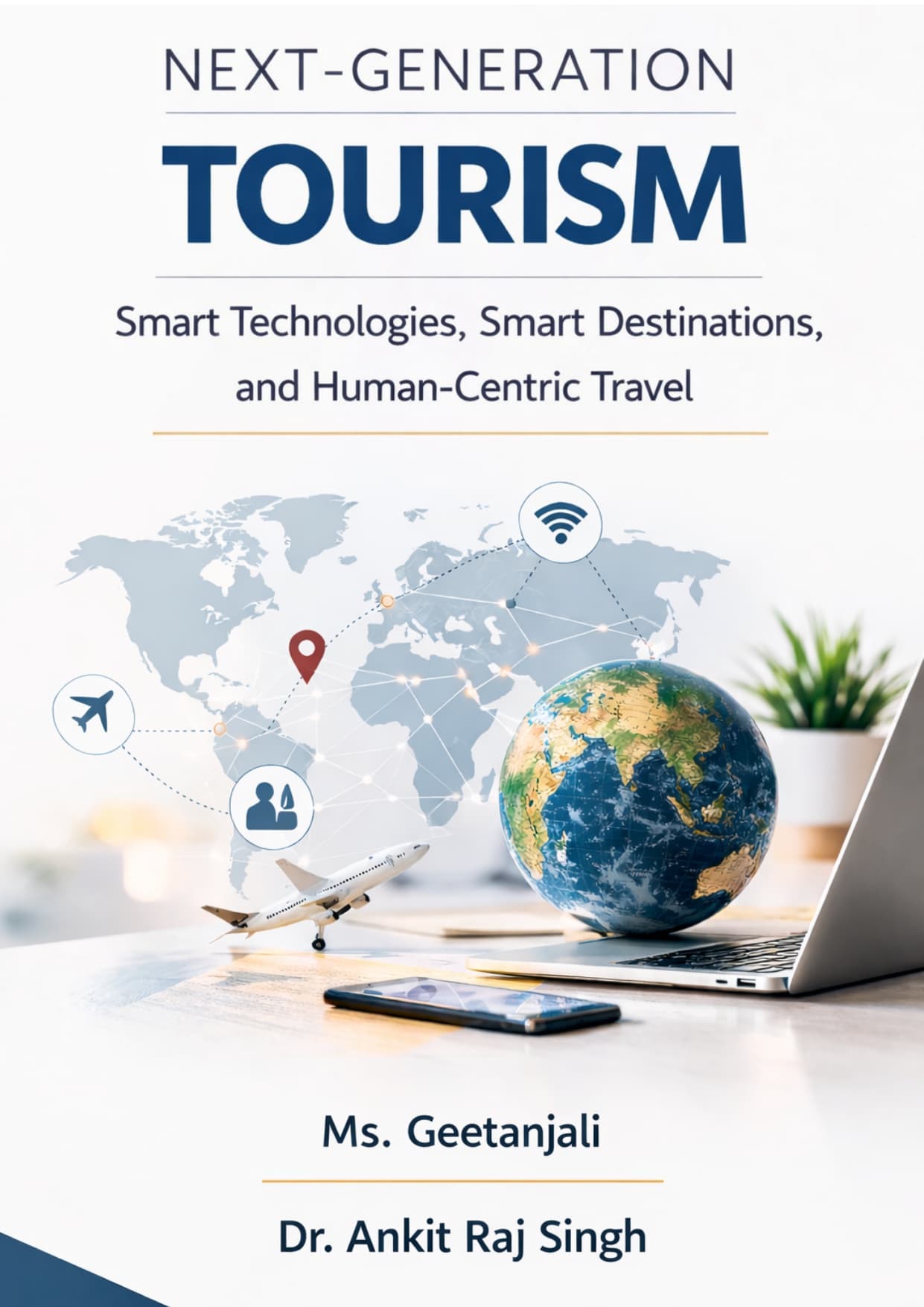
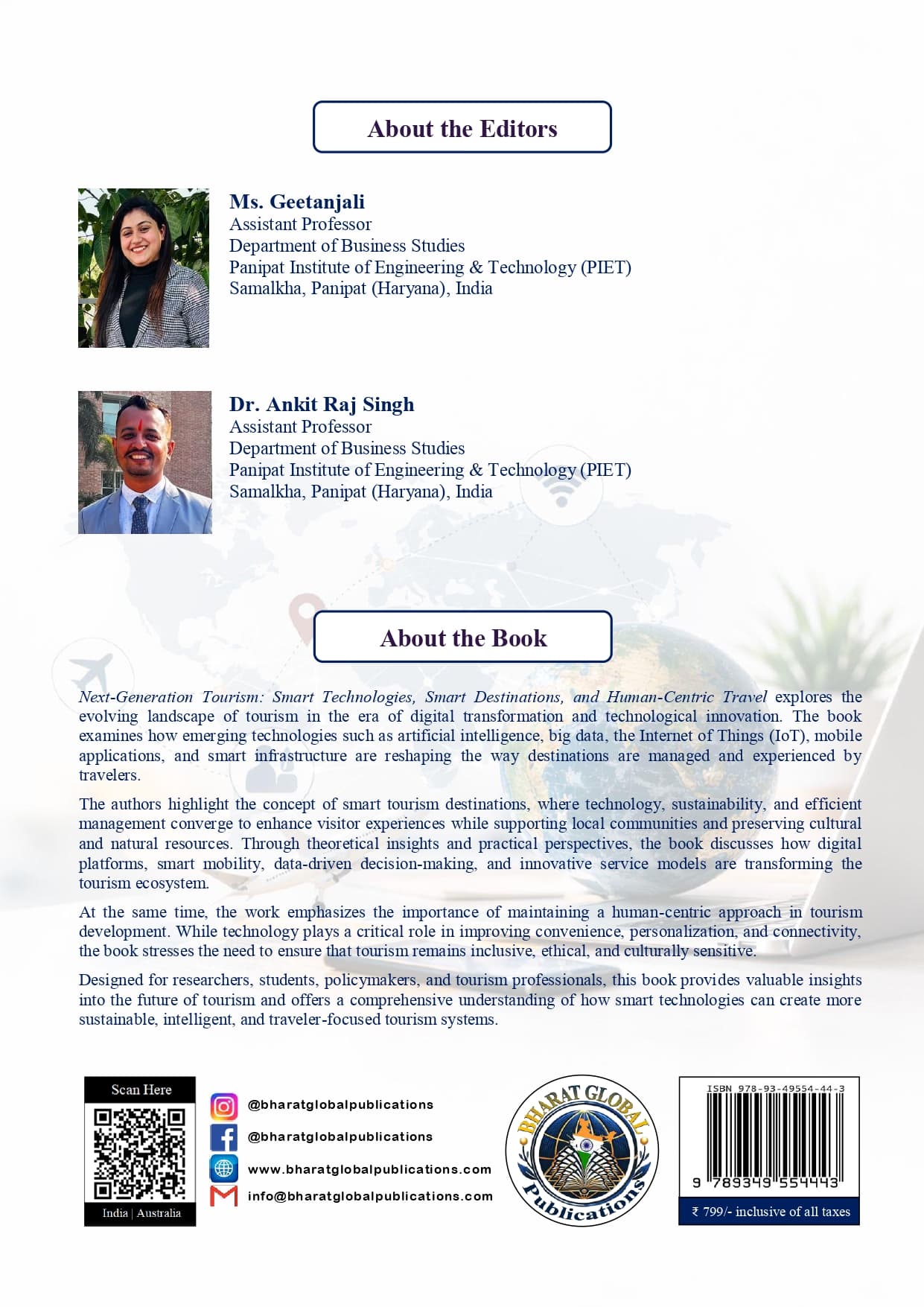
Next-Generation Tourism: Smart Technologies, Smart Destinations, and Human-Centric Travel explores the evolving landscape of tourism in the era of digital transformation and technological innovation. The book examines how emerging technologies such as artificial intelligence, big data, the Internet of Things (IoT), mobile applications, and smart infrastructure are reshaping the way destinations are managed and experienced by travelers.
The authors highlight the concept of smart tourism destinations, where technology, sustainability, and efficient management converge to enhance visitor experiences while supporting local communities and preserving cultural and natural resources. Through theoretical insights and practical perspectives, the book discusses how digital platforms, smart mobility, data-driven decision-making, and innovative service models are transforming the tourism ecosystem.
At the same time, the work emphasizes the importance of maintaining a human-centric approach in tourism development. While technology plays a critical role in improving convenience, personalization, and connectivity, the book stresses the need to ensure that tourism remains inclusive, ethical, and culturally sensitive.
Designed for researchers, students, policymakers, and tourism professionals, this book provides valuable insights into the future of tourism and offers a comprehensive understanding of how smart technologies can create more sustainable, intelligent, and traveler-focused tourism systems.